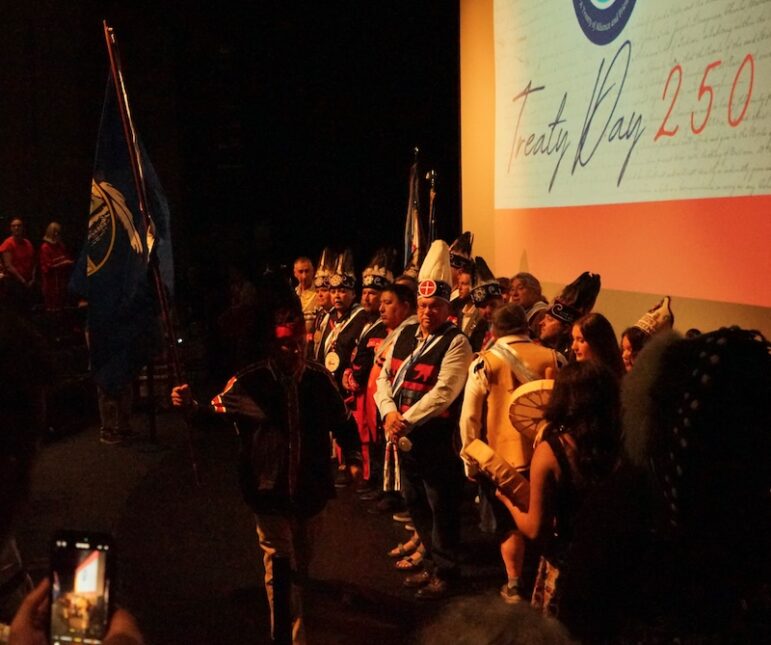
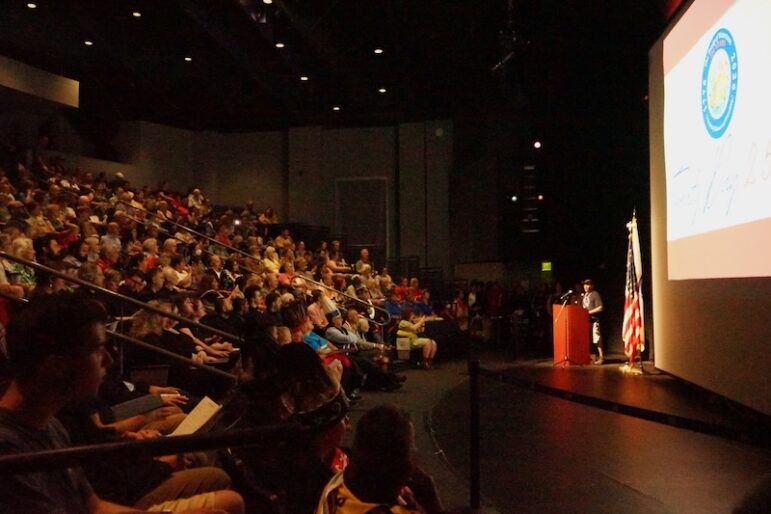
Hundred packed a theater in Watertown on Saturday to celebrate an event that took place 250 years before. The town was the site of the signing of the United States’ first treaty with a foreign nation — the Treaty of Watertown. Descendants of the signers of the document from the Mi’kmaq and Maliseet tribes emphasized that the agreement that was forged as a wartime alliance also created friendships and provided rights and protections for the signers that are still important in 2026.
The City of Watertown joined with the Historical Society of Watertown, and members of Maliseet, Mi’kmaq tribes, as well as representatives of the Massachusett Tribe, whose territory includes Watertown, to plan a grand celebration of the 250th anniversary of the Treaty of Watertown on Saturday, July 18, 2026 at the Mosesian Center for the Arts.
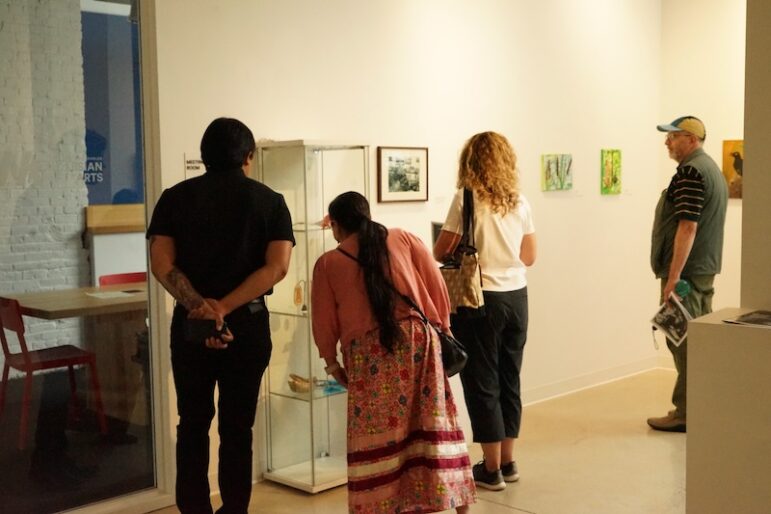
Around 50 members of the Mi’kmaq and Maliseet tribes came down from Maine, and parts of Canada for the Treaty celebration. The afternoon included ceremonial drumming from a group of young Mi’kmaq women, artwork and artifacts by indigenous artists, workshops on wampum and corn husk dolls making, documentaries about the history of the Treaty, and remarks by representatives from the Massachusett, Mi’kmaq, Maliseet, and from Watertown.
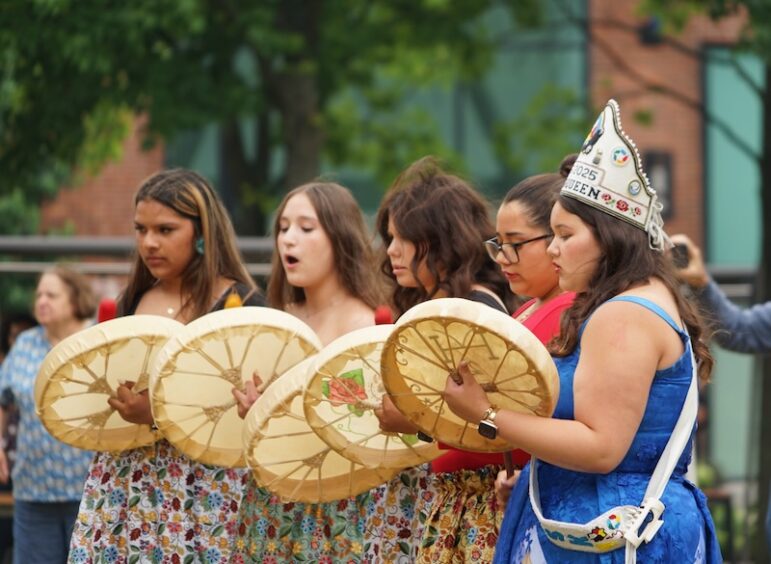
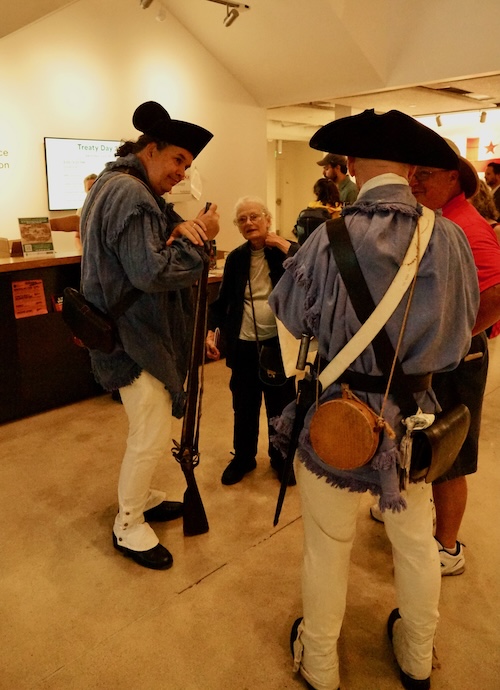
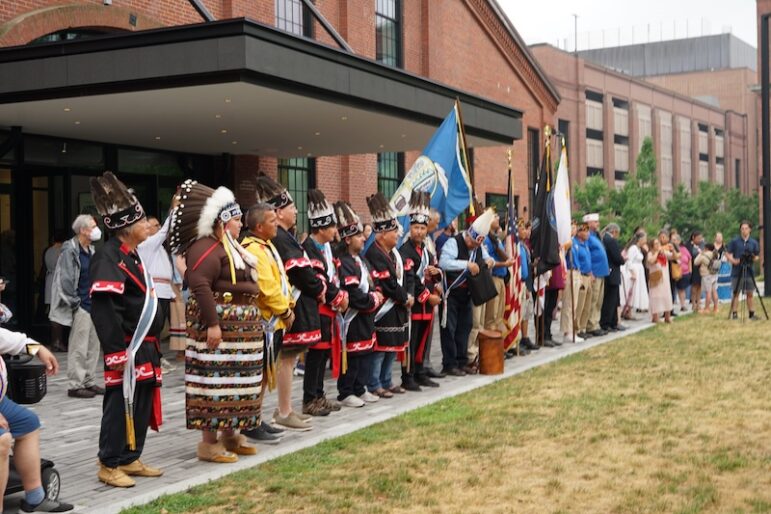
The day ended with more ceremonial drumming; a color guard of Watertown, Maliseet, and Mi’kmaq veterans; and a musket salute by members of the Watertown Provincial Guard re-enactors.
The Treaty continues to live today, said Norman Syliboy, Grand Chief of the Mi’kmaq, who added that his tribe has another name for the Treaty.
“We call this One Heart Treaty. Our ancestors told Governor (James) Bowdoin that the mighty, almighty, has given the American and the Mi’kmaq one heart,” Syliboy said. “Bowdoin announced that we have become brothers, united under the treaty, joined as one people, and that one chain between us should be ever broken.”
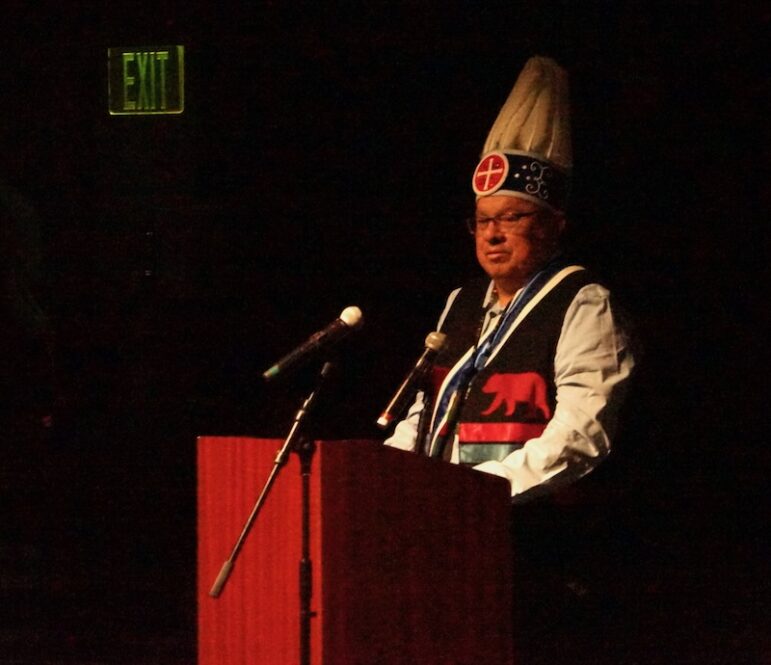
Andrew Denny, Kji-Keptin of the Mi’kmaq, noted that when the new nation sought allies, it turned to the indigenous people of the area.
“We gather to remember a moment where the ink on the American Declaration of Independence was still wet on the inspirational and foundational truths of human equality, an unalienable right to liberty of a new nation,” Denny said. “We look back to July 1776 in the Town of Watertown. Desperately needed allies to secure the northern frontier, the United States did not look to European empires. Instead, they looked north to the sovereign, historic powers of this land, the nations of the Wabanaki Conservancy.”
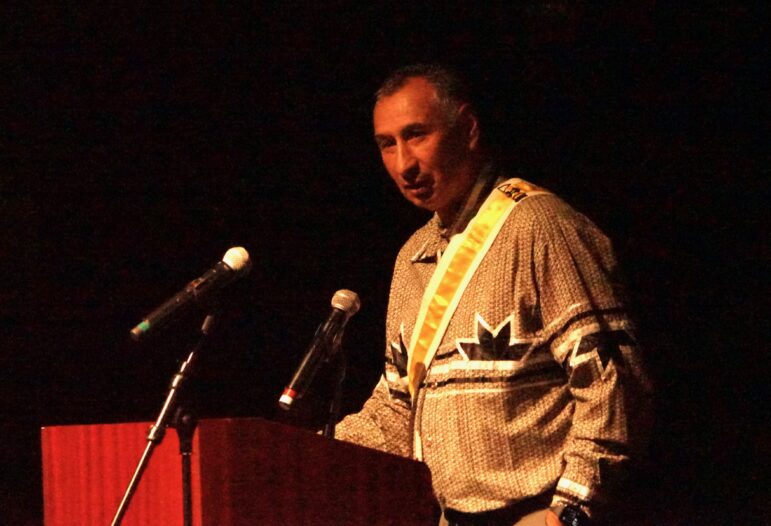
Henry “Hank” Bear, a descendant of Ambrose Bear — a Maliseet signer of the Treaty of Watertown — has attended several Treaty Days. He has always felt welcome in Watertown.
“I just am amazed at how well we’re treated. Thank you for treating all of us good, our great fellow allies in this Treaty relationship,” Bear said. “I want to thank the host for what is happening right now, and how every time we come here we are treated so well. And I think it’s who you are. I think it’s the principles that you live by, and that was brought to the Treaty 250 years ago — the hope for peace and security.”
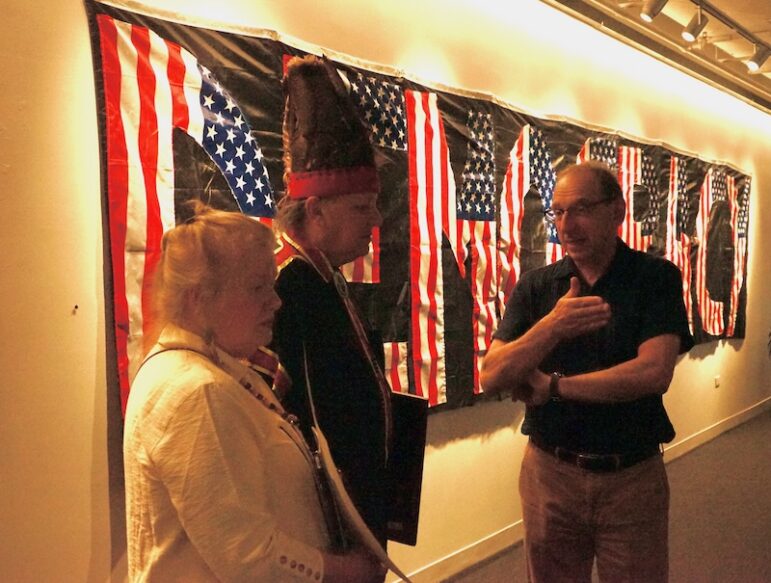
One example of the hospitality he experienced was when his group arrived Friday, they found the City Hall had closed for the afternoon. When trying to get to the right location they got an escort from the Watertown Police to find the correct location.
“Now that’s being treated good!” he said.
The Treaty
In the days after the Declaration of Independence was signed in Philadelphia, representatives from the Mi’kmaq and Maliseet (also called the St. John’s) tribes traveled from the area that is now Maine and Canada. General George Washington and the Continental Army saw that area as a potentially vulnerable spot, and sought an alliance with the tribes who lived there.
The Maliseet were represented by Ambrose Bear, Newell Wallis and Francis (no last name), and the Mi’kmaq delegation was made up of Joseph Denaquara, Charles (no last name), Mattahu Ontrane, Nicholas (no last name), John Battis, Peter Andre, and Sabbatis Netobcobwit.
The signers from Massachusetts were James Bowdoin, Benjamin Greenleaf, Caleb Cushing, Richard Derby, John Winthrop, Thomas Cushing, John Whitcomb, Eldad Taylor, Samuel Holton, Moses Gill, John Taylor, Benjamin White, Ebenezer Thayer, Henry Gardner, Daniel Hopkins, Daniel Davis, and Jabez Fisher.
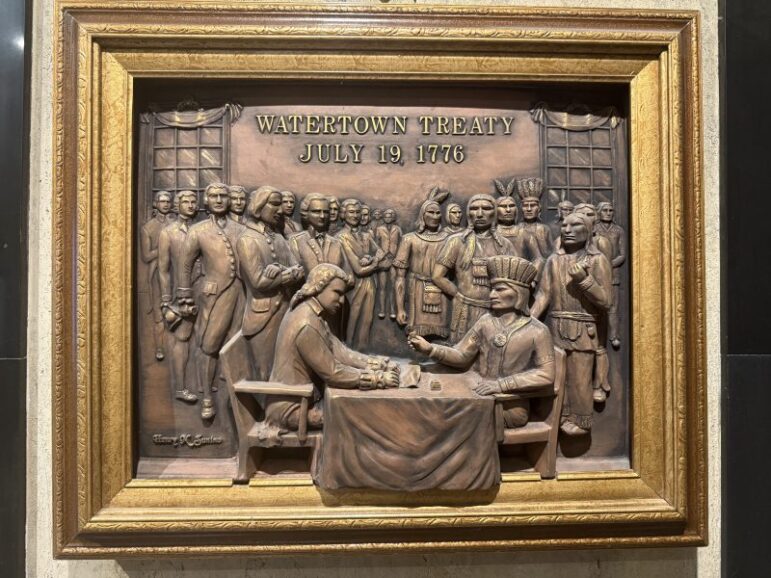
The Maliseet and Mi’kmaq delegations first sat down with the representatives of Massachusetts on July 12, 1776, said Marilynne Roach of the Historical Society of Watertown. She noted that they were still unaware of the signing of the Declaration of Independence.
The negotiations took place in two places in Watertown. The Massachusetts General Court met in the Town’s meeting house, an all-purpose public building for religious and civil unions, Roach said, while the Executive Branch convened nearby in Edmund Fowle’s requisition home.
“Why Watertown? Why not Boston? Because for the whole year and a half leading up to that point, Watertown had served as the de facto capital of Massachusetts during the siege of Boston,” Roach said. “And due to the lingering presence of smallpox in the capital, it remained the seat of government after the British Army left.”
During the negotiations, Bowdoin “itemized all grievances against the British from April 19 through the Battle of Bunker Hill,” Roach said.
On July 18, 1776, the first copy of the Declaration of Independence reached Watertown. The Massachusetts representatives read it to the Mi’kmaq and Maliseet delegations, which was recalled by Bear, a descendant of Ambrose Bear.
“The Declaration was read, and the chiefs were asked, “What do you think of this? And they didn’t respond immediately. Apparently, there was a pause,” Bear said. “They had to caucus to come up with one voice. Ambrose Bear is recorded as saying, and I quote, ‘We like it well. We see now that America is right and old England is wrong, and we will join with you in this fight against the old Father,’ he then gets recorded as saying.”
The Maliseet and Mi’kmaq then jumped to their feet, “manifesting a desire to go to war immediately, right there on the spot. Let’s go!” Bear said.
The Treaty of Watertown was signed on July 19, 1776. The General Court agreed to the formation of a regiment of 500 Mi’kmaq and Maliseet soldiers who would serve alongside 250 American soldiers under General Washington, Roach said. The commanding officer was to be American, as were half of the other officers, Roach said, and the other half of the indigenous.
“So it’s the beginning of a alliance,” Roach said. “And if you read the whole text of the treaty, there is no expiration date.”
With the Treaty still in place, Bear said in recent years the Maliseet have offered to send soldiers to help the United States.
“Enemies of each other were considered enemies of each other, even in modern times. I remember when the Jan. 6 Insurrection was going on, so called, and we wrote to Congress immediately within 24 hours, ‘Do you need us?'” Bear said. “We quoted the Treaty. We will send you 500 soldiers to protect the seat of government of the United States. Congress wrote back, ‘We don’t need you, yet. Hold on.’ If they had thought the attack on the Capitol was by enemies, we were ready.”
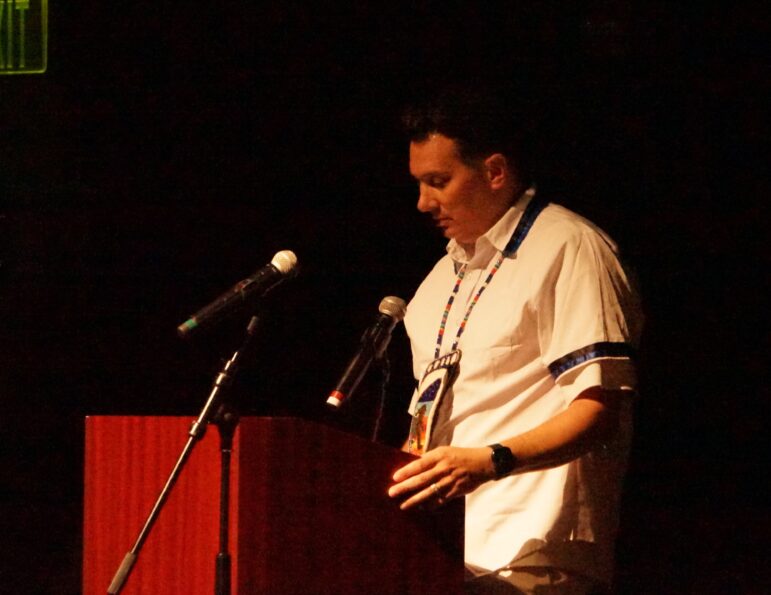
Thomas Durfee, a Mi’kmaq, spoke about the ongoing impacts of the treaty.
“Our ancestors chose cooperation, not conquest. They secured recognition of our inherent rights, our lands, and our path to prosperity. This treaty reminds us that our nations can thrive together. It shows us that trade, innovation, and progress are born from partnership, not domination,” Durfee said. “The Mi’kmaq have always been stewards of this land, and our history is woven into the fabric of North America. Let’s unlock our shared markets, cultures, and dreams. Together, we can build a future where indigenous rights are respected and all nations prosper.”
The tribes still enforce other rights in the treaty, including crossing the border, and access to hunting and fishing areas. Syliboy said those rights have not always been allowed, more so north of the border.
“Today, the One Heart Treaty continues to guide our relationship. Many Mi’kmaq families have lived and worked in New England and Boston for generations. Supported by the promise of the Treaty, the federally recognized Mi’kmaq Nation in northern Maine continues to serve Mi’kmaq families throughout the United States,” Syliboy said. “I also want to mention that being able to travel across the border and from Canada to the United States is part of this Treaty, and unfortunately, it’s not recognized on the other side of the border. But I hope someday it will.”
Sometimes Forgotten
While the Treaty of Watertown continued to be an important document for the Maliseet and Mi’kmaq tribes, the document and the agreements it contained was all but forgotten in Massachusetts.
In 1981, the ability for the Mi’kmaq to cross the U.S.-Canadian border was threatened, so Wilfred “Will” Basque traveled from Nova Scotia to Boston to remind the Americans about the Treaty, recalled his wife Rose.
“They had the monument in South Boston, the first time they recognized the Vietnam veterans,” Rose said. “He wanted to come down. They were going to close the borders for Mi’kmaq people and then the Grand Council asked him to come and educate the politicians, and that’s what he did.”
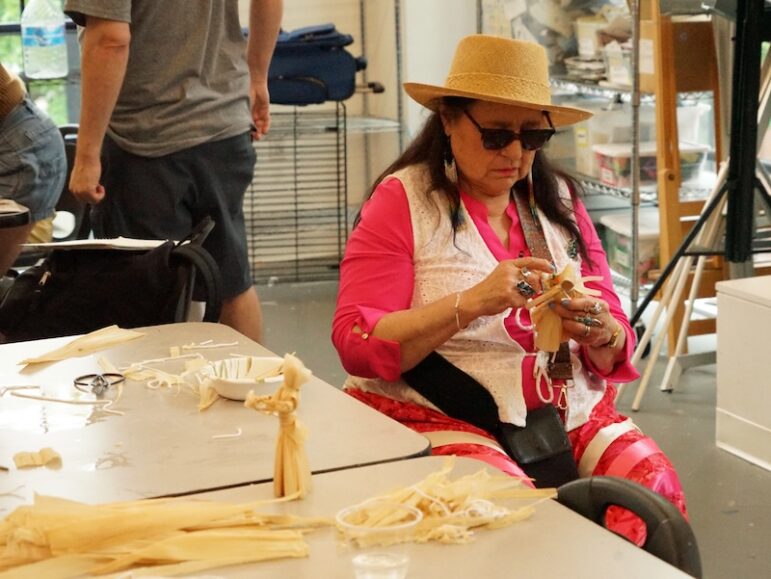
Will spent about a year in Massachusetts educating various leaders about the Treaty of Watertown, Rose said.
Basque was a former U.S. Marine Staff Sergeant who served in Vietnam. During the 250th Celebration, Rose read a poem called “Sma’knis” or Soldiers, that he wrote in honor of USMC Lance Corporal Vincent Bernard, who was killed in action on Sept. 21, 1968 in Vietnam.
As a result of Basque’s work, then-Gov. Michael Dukakis issued a proclamation of friendship and alliance renewal when Mi’kmaq Grand Captain Alex Denny and other leaders participated in a renewal ceremony at the Massachusetts State House in 1987, Roach said.
Before the ceremony was held, the State reached out to Watertown officials, who asked the Historical Society what they knew about the Treaty. At the time, the president of the Historical Society was 26-year-old Paul Brennan.
“I got in a little bit of a panic mode because I didn’t know. I had never heard anybody speak of it,” Brennan said. “And he further said, ‘Oh, by the way, they’re having a State House event for this re-signing. Do you want to go?'”
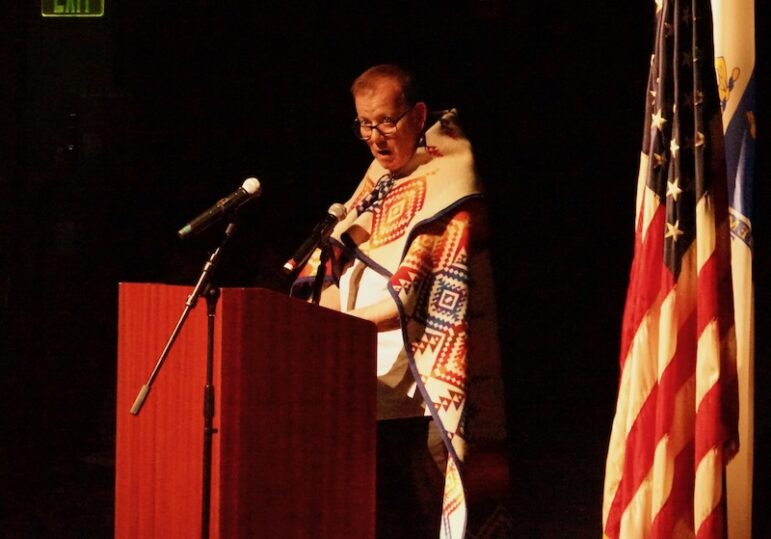
Brennan asked tried to find out if anyone knew about the Treaty of Watertown.
“I asked every one of the Historical Society senior historians, and they said they had never heard or it. This is important. But I went there anyway, and that’s when I became amazed,” Brennan recalled. “There was this ancient treaty signed in 1776 of friendship and alliance. There I marveled at having a front row seat to all of the Massachusetts State officials and all of the Grand Council members of the Maine, Nova Scotia, New Brunswick, St. John’s Native American communities. I literally asked the person next to me if they pinched me. It was that exciting.”
At the State House ceremony, Brennan met Alex Denny, Frank Nevin, and Will Basque.
“Will Basque inspired me most. He had served the United States in the Vietnam War. I think two tours. but the most impressive thing is he spoke about the Treaty as if he had grown up with it,” Brennan said. “He knew about it. He was serving his nation, our nation, and this Treaty.”
When Will passed away in 1998, Brennan went to Nova Scotia and met his mother, who later wrote and mentioned that when he was in Vietnam, Will would write home every week.
“Will Basque understood then that this Treaty is healthy and alive, and just as much as it was when it was first written,” Brennan said. “When I look at everyone in this room, I see you all, like Will Basque, as potential super warriors. You are the ones that will continue to share the news about this first international treaty between the Mi’kmaq, Maliseet, Saint John’s, and Passamaquoddy Indians and these United States of America.”
About a decade after the rediscovery of the Treaty of Watertown, the Historical Society began celebrating Treaty Day. The first one was held in 1996. Celebrations have taken different forms, Roach said.
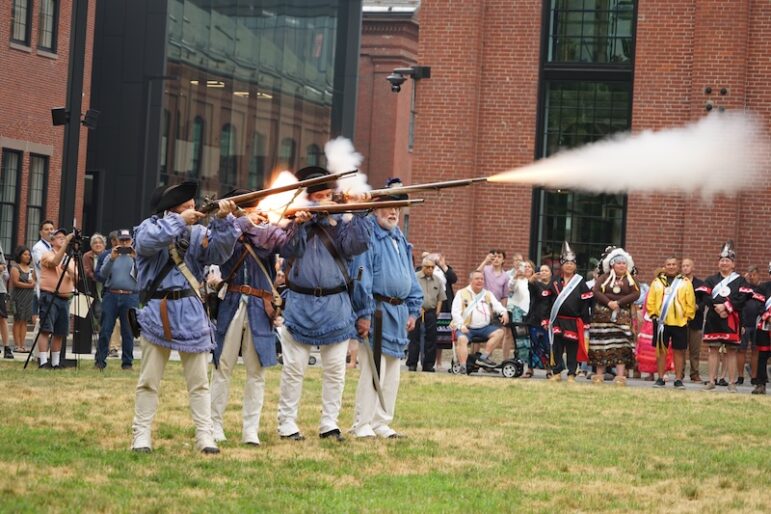
The first few started with people arriving by canoe at the dock in Watertown Square, with a procession to the Fowle House. In 2000, the celebration was part of the Faire on the Square. In the early 2000s a powwow was held at O’Connell Field. When the Fowle House had been restored, the Historical Society began hosting gatherings in the backyard of the house. A reenactment of the Treaty signing was held in 2010, and was attended by Chief Roland Jerome of the United Native American Cultural Center, which is based in Devens, Mass. In 2013, Then-Gov. Deval Patrick attended a reenactment at the Fowle House. Starting around 2019, the Historical Society’s ceremony was moved to the Watertown Senior Center, across Marshall Street from the Fowle House to escape the heat.
“In 2024 we were surprised when members of the Grand Council showed up,” Roach said. “That was very nice and exciting, and led to more associations with the Mi’kmaq and the Maliseet, and led to this stage where we all are now.”
The 2026 celebration included a dinner on Friday night for the Mi’kmaq and Maliseet who came down to celebrate the Treaty’s 250th anniversary. Joining them at the dinner at the Commander’s Mansion were members of the Massachusett Tribe, as well as town and state officials, and representatives of Revolution 250. The dinner was prepared by Chef Sherry Pocknett, the first indigenous woman to win a James Beard Award.
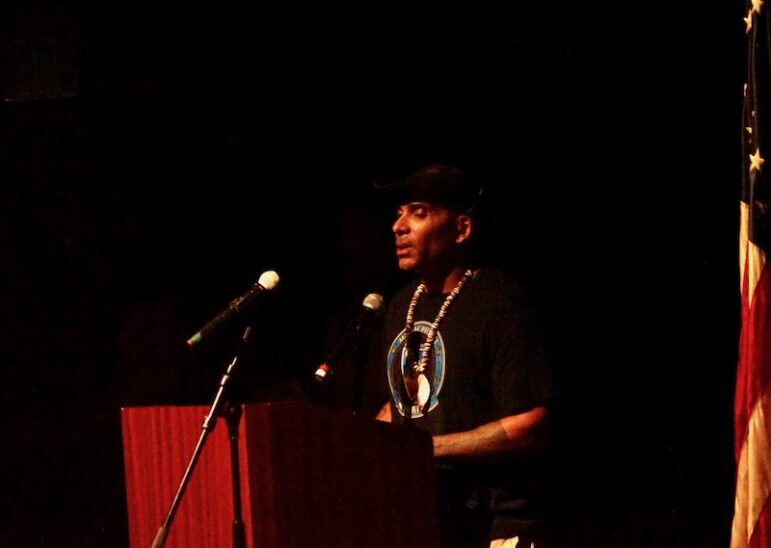
A chance for members of tribes from different areas was a rare occasion, said Faries Gray, Sagamore of the Massachusett Tribe.
“We had a dinner last night, and it was beautiful to talk to you guys,” Gray said. “We don’t get that much here in Watertown today, so I want everyone to appreciate the fact that they made this journey over a great distance to come here to be a part of this to honor their ancestors.”
At Saturday’s ceremony, Gray added: “So even after this event is done after everyone goes home. Don’t forget, it wasn’t just columnists that died for freedom. It was also the indigenous people, and we’re here today to remember their ancestors that made that huge contribution for all of our communities.”
During the ceremony City Council Vice President Vincent Piccirilli read a proclamation adopted by the City Council for the 250th anniversary of the Treaty of Watertown. The proclamation concludes: “The people of Watertown commit to upholding the histories and legacy of this treaty and continuing forward the alliance and friendship of the Native Nations that has defined this treaty for generations.”
Liam Horsman, Regional Director for U.S. Sen. Edward Markey, read a statement on behalf of the Senator, which said, in part:
“We honor not just the first foreign treaty adopted by the United States after the signing of the Declaration of Independence. We also reflect on the complexity of American history, the promise and work of liberty and equality, and the significant ways in which the United States has not yet met that promise, especially in its treatment of native peoples and nations both here in the United States and around the globe.”
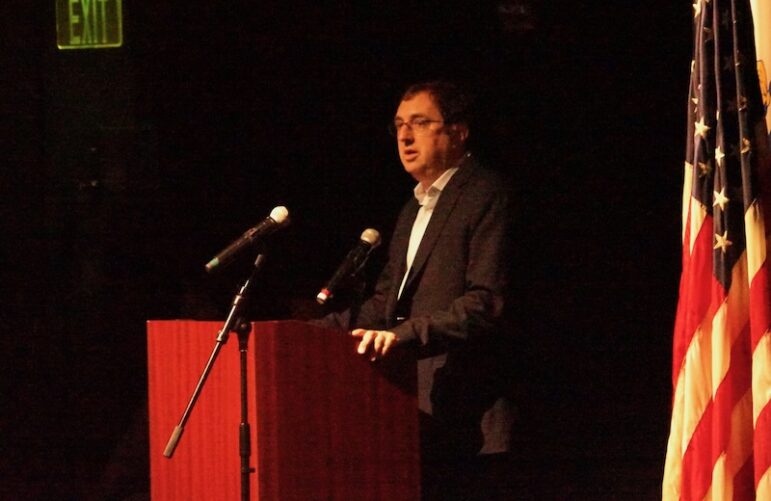
City Manager George Proakis said that, while Watertown officials did not sign the Treaty in 1776, the words contained in it reflect what Watertown strives for today.
“Watertown is defined by its ingenuity, its propensity for being a leader, and the people who have brought their culture to our neighborhoods to build their communities,” Proakis said. “Watertown strives to bring neighbors together, inviting one another into each other’s homes and sharing a helping hand whenever they need one.”
See the program from the Treaty Day 250 celebration, including the text of the Treaty of Watertown, the poem “Sma’knis,” and the lyrics of the song “Lamentation Over Boston” by clicking here.
A rebroadcast of Watertown Cable’s Treaty Day 250 coverage can be seen here.