One of the biggest topics of discussion around Watertown, these days, is the parking garage proposed to go on the lot behind CVS in Watertown Square. People ask how big, what will it look like, how much will it cost, who will pay for it? There is a key question that needs to be answered first, City Council President Mark Sideris and City Manager George Proakis said in a recent interview with Watertown News: Should the City build a garage?
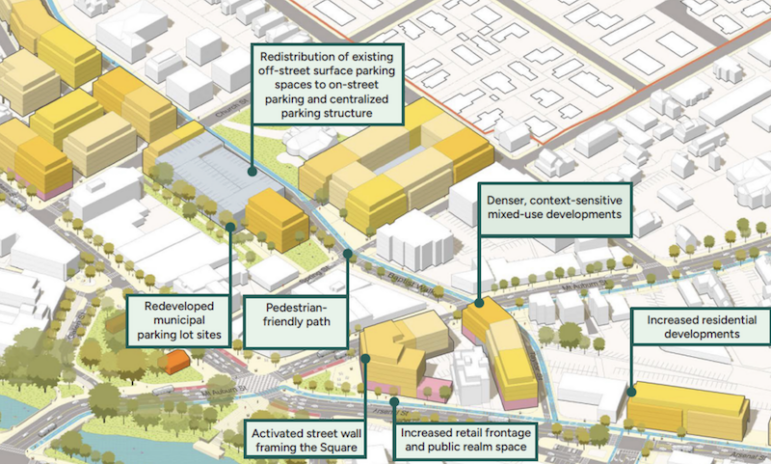
Images of a garage and multi-story residential buildings appeared when the first drafts of the Watertown Square Area Plan were discussed at the Design Charette held in November 2023. More detailed mockups made it into the final Plan approved by the City Council in the summer of 2024.
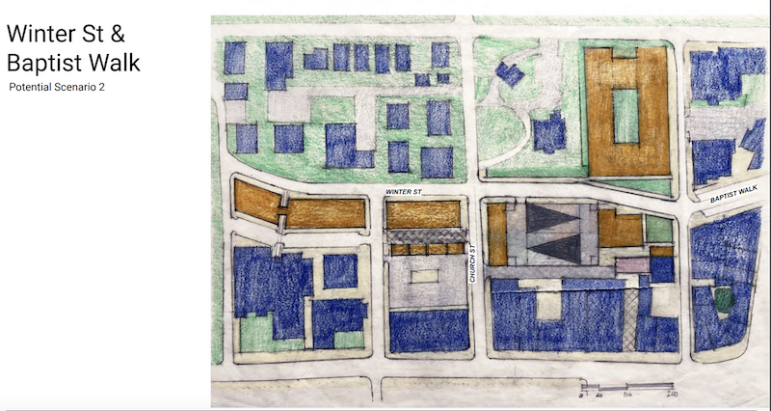
In April, Proakis presented a possible public-private partnership to build what is also known as the Demonstration Project. The City would team with a private developer to build a garage on the southeast portion of the lot (including the Gray Block where Tresca’s is located), a residential building on a combination of the north section of the parking lot along Spring Street and private parcels to the north, plus a small park on the southwest section of the current municipal lot. Retail space was shown on the two ends of the garage and on one side of the residential building.
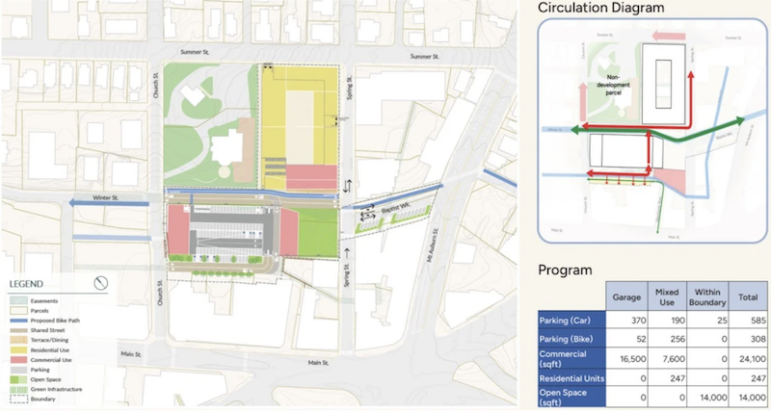
The presentation generated much discussion. Many oppose the idea of a multi-story garage and a sizable residential building on the municipal lot. A resident recently told the City Council that building a garage on the current lot would make Watertown Square feel like the center of Malden.
During one of the Watertown Square Area Plan meetings, Proakis said the City did a quick poll where people used cellphones to vote. They asked people about what they thought about various parts of the Watertown Square Area Plan.
“There was a substantially high support for improving the intersection, for making it more walkable, for providing a better strategy for flow there, for just upgrading the intersection and getting the extra open space,” Proakis recalled. “Then the talk about doing public-private partnership redevelopment with the garage was the last question we polled, and it polled more than 50% in favor. But people were not as excited about the garage as they were about the intersection.”
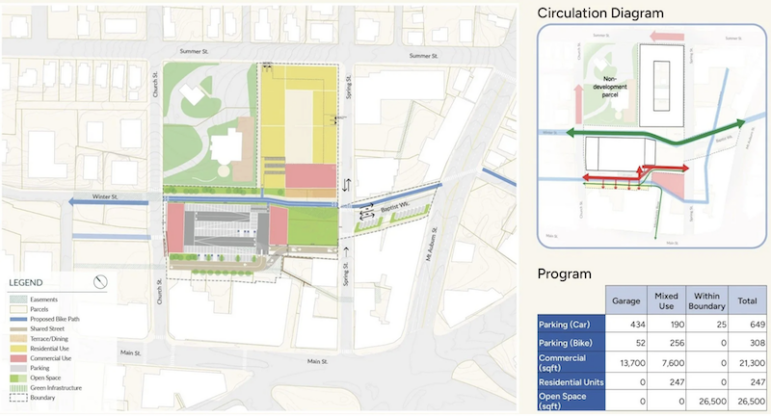
Before the City wades into the details of a project that would include a garage, Sideris said he wants to answer a basic, fundamental question.
“The first step that I think we have to take is to have a public discussion at the Redevelopment Authority, which is the City Council, about do we want a garage?” Sideris said. “Before we start running into questions about more housing and more retail, and how we’re going to do it, I think the fundamental question is going to be, ‘Do we want a garage?'”
Why a Garage?
The idea of a garage did not start with Proakis. Since he first got on the City Council more than 25 years ago, Sideris recalls that budgets under the previous City Manager, Michael Driscoll, included a garage in the list of desired capital projects.
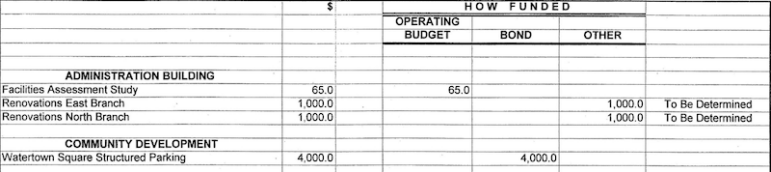
“It was in the capital improvement program every year. It always had a TBD,” Sideris said. “We didn’t look into public-private partnerships, and the original plan was maybe just a deck above (the parking lot), but then we never followed through. There was a plan done, but we never decided to move forward because we didn’t have the economic opportunities to do so. It was too expensive, and we were funding other things. Then labs and things came along, and we decided to do schools instead.”
Putting a garage on the municipal lot would have benefits, Proakis said.
“The first of which is it kind of clarifies for the people driving here what the retail destination involves,” Proakis said. “There’s a single central place where you know you’re going to have access to parking, and that can better support the retail destination over the long run, and that can better support the Square over the long run.”
Sideris said that there are times when the Municipal Parking lot is full, such as some Friday nights. He is hopeful that more parking would allow for additional retail to come into Watertown Square.
“I think there’s potential of attracting some better storefronts, some better retail, some better restaurants,” Sideris said. “I’m not talking about bringing a Walmart type thing here, but we’re talking about, just picking a name, a Capital Grill in Watertown Square. Would you go? More than likely people would go.”
Proakis envisions people parking in the garage not just to go to storefronts right off the lot, but also across Main Street and even across Mt. Auburn Street.
“I think if we build a more walkable streetscape and combine it with this, the idea is going into one central place and then being willing to walk a few blocks to whatever retail may be there,” Proakis said. “Walking into the downtown from folks who live nearby is definitely the best idea.”
Adding more housing would also benefit retail in the area, he said.
“I’ve talked about how you need more housing, because I think that more people living nearby makes it easier to get more retail going,” Proakis said. “But also having centralized parking in one place and having a reliable place where you know you can go.”
The Demonstration Project proposal also includes a new park which would have retail facing it from both the garage and the retail building.
“We actually get an open space activated by retail,” said Proakis, who added that he thinks it is important for the City to own the park, rather than it be part of the privately-owned residential building.
The garage could also take pressure off the potential loss of parking in other areas, such as the lot behind the Watertown Free Public Library if the library expands.
“If you put enough spaces in that garage, when we’re talking about a library expansion — which they’re discussing for the future, that’s a part of their 10 year plus plan — then I’m not panicked about the idea that I need every parking space in the library lot,,” Proakis said. “Because I also know that I’ve got a central parking location that’s a block away.”
The library expansion could be an opportunity for affordable housing to be constructed, Proakis said.
“I don’t want to jump too far ahead, but I will just say the City of Boston is building library expansions with affordable housing and combined buildings,” Proakis said. “There are some really interesting public-private models out there. They’re doing 100% affordable with nonprofit developers attached to library expansions.”
Some have asked for housing to be constructed on top of the parking garage, along with the separate residential building. Proakis said that would increase the cost of a garage. Under the proposal he discussed in April, Proakis looked at building a garage with precast cement panels, similar to the garages at Arsenal Yards.
“Once you put something on top of it, you actually have to build a ground-up garage,” Proakis said. “The beauty of the precast is I can hang precast panels on it, that we can make them look really nice, and you can do it at a relatively affordable cost. I’m still trying to get some real numbers on what that means.”
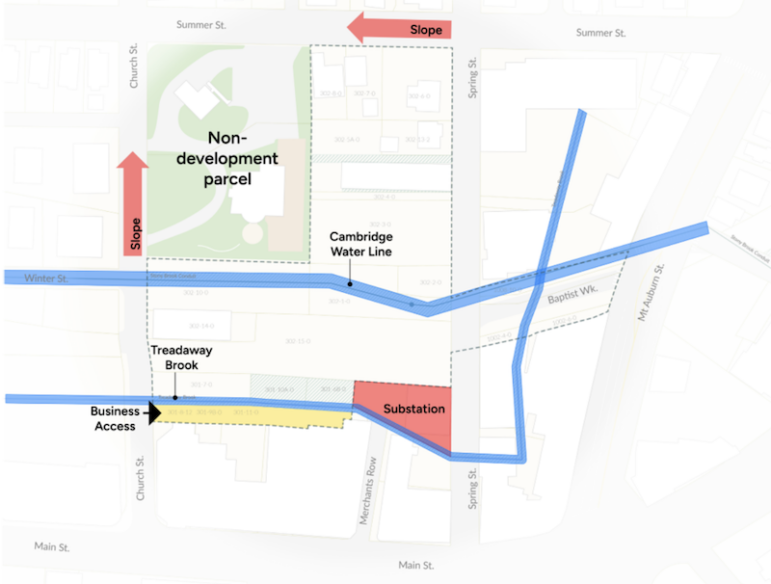
The site comes with some limitations, Proakis said, including the Cambridge Aqueduct that runs through the site to the north of the building where Tresca’s is located and then bisecting the parking lot east of there. Also, the soil underneath the parking lot and the location near the Charles River also presents challenges.
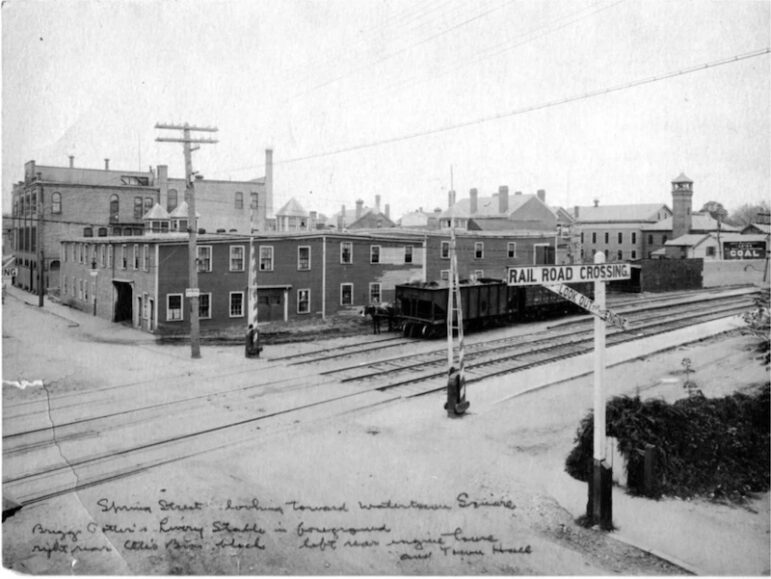
“I can’t build an underground garage either, because of the (shallow) water table, and it’s all railroad lands,” Proakis said, who said that the area once had multiple railroad tracks. “Once you break the cap of what’s there, it’s not an official cap, but once you start digging out soil and stuff, it could be a very complicated site.”
Financing the Garage
The argument for doing both the garage and the residential building at the same time is that it would provide a growth in taxes that could be designated for constructing the garage.
“If I knew that I had a residential project going up that was going to generate $500,000 a year in taxes,” Proakis said. “And I knew I could build a garage that was going to be financeable with $500,000 a year of bonds, I would just say let’s just do the both, and even though it’s all general fund in and out, it’s all going to balance out and work fine.”
Some communities would go out and create an official district improvement financing district where the tax increment is dedicated to the bonds, Proakis said, but he believes that can be done without that step.
“I don’t actually think it’s necessary to do that, because the numbers are actually the same,” Proakis said. “It’s just a whole bunch more paperwork in process.”
By constructing the garage and the residential building as a single project, it may be provide an opportunity to do a project that costs less than building them as two separate projects.
“If I do the Demonstration Project, I will build a project that is likely more financeable that can fund tax increment to pay for a parking garage, and potentially put ourselves in a situation where we can do a lower cost project by having one entity do the whole thing,” Proakis said. “And it’s possible then that if they’re working on the retail on both of these sides, they can create a centralized retail strategy around the green space that makes it more viable and more interesting.”
The projects could be done separately. To do so, the City would have to borrow money to build the garage, Proakis said.
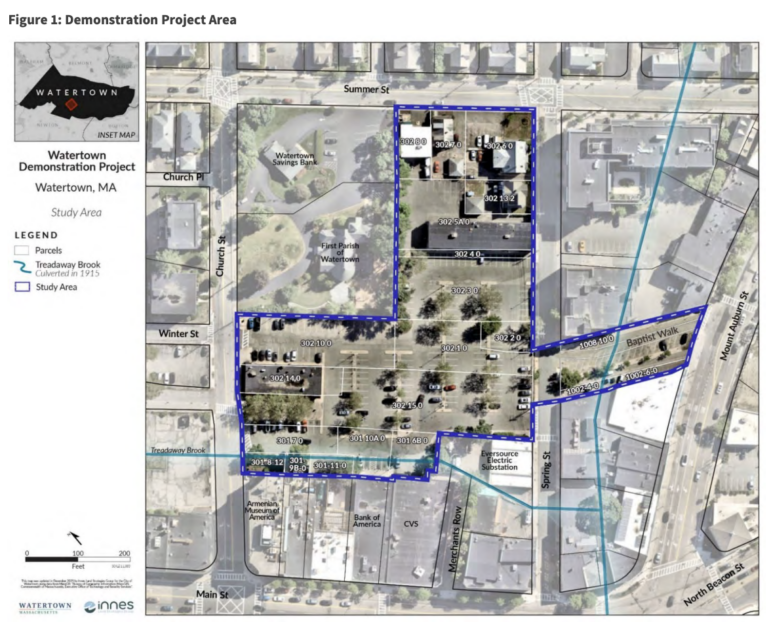
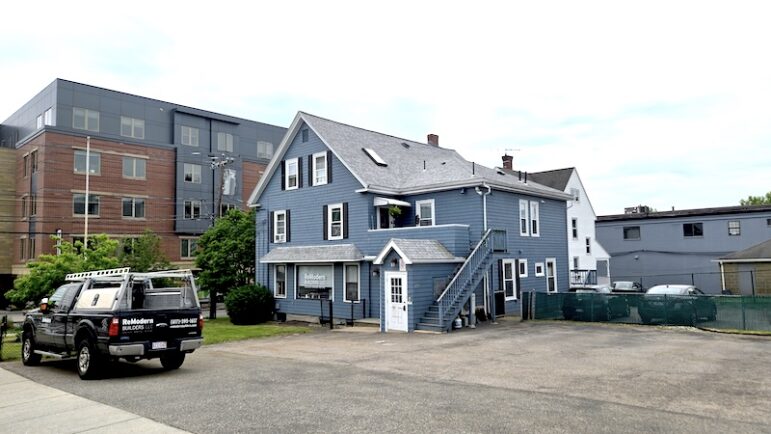
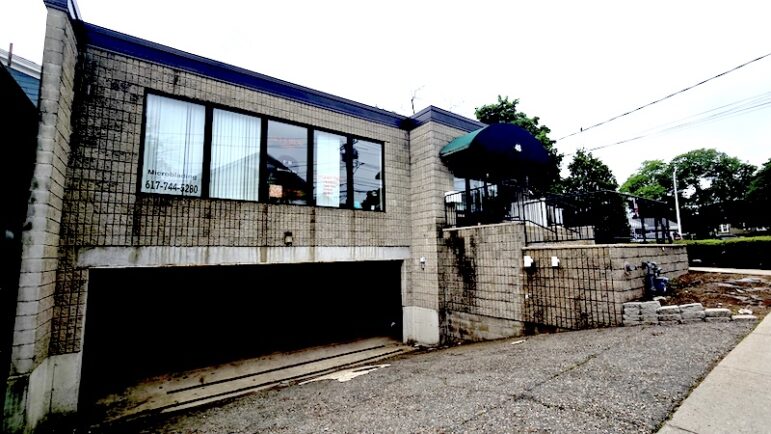
The developers that approached the City to do a joint project, Hg80 Real Estate, have an agreement with the owner of four properties just north of the Municipal Parking Lot, but the proposed Demonstration Project would also include the City selling a portion of the parking lot to add to the residential project. There is also a building which they do not have an agreement to purchase: the building is on Summer Street, west of the property that Hg80 has an agreement and east of the First Parish Church property that also has a Watertown Savings Bank drive-through branch.
Proakis said it is possible, in theory, to build a residential building only on the four properties, but he is not sure how easy it would be to get financing.
Making the Decision
Sideris would like to start the public discussion about whether or not to build a garage, soon. He wants to start this summer, and it could be as soon as early July. Having a decision will allow the planning to start, or to move on to other parts of the greater Watertown Square redevelopment.
“If everybody’s going to say we hate the garage, we don’t want the garage, then I’m not going to waste a lot of time,” Sideris said. “I’m not going to waste months and months of discussions to come to the same conclusion.”
While Proakis’ proposal was presented in public in April, and an open house was held in May for the public to look at the plans and give input, there has not been an official public meeting.
“The Council hasn’t weighed in yet,” Sideris said.
Public reaction so far has shown Sideris that the decision will not be an easy one.
“This is going to be one of those, you’re going to make half the people mad and the other half of the people are going to be happy,” Sideris said. “It’s a tough decision, and either way, it’s not going to sit well with some people.”
And if the Council doesn’t want a garage?
“If it’s not a good idea, then all of the other stuff doesn’t work,” Proakis said. “At that point, we’ll spend time on the streetscape, for the most part, and we’ll keep working with the private development world on whatever lots they want to put together (around Watertown Square) and what they want to do. And then we’ll just keep our surface lots as our surface lots.”
See the Watertown Square Improvement website by clicking here. See the virtual open house by clicking here.
How about you stop turning Watertown into some version of Somerville and instead start with dealing with making Winter street a proper street with sidewalks!
Why do local people have to accept all these years of neglect!
How about you stop thinking about more business and more people and instead think about the people already here!
I would like a change in philosophy for the Watertown Sq. A Mt. Auburn style. A Frederick Olmsted perspective where people and nature are the first thoughts in why people would want to come to Watertown Sq.
Your priorities are backward.
Thanks for your comments David. I couldn’t agree more – the priorities are backward. Test out the Square traffic patterns, clean up Main Street, have owners take care of their properties i.e., some standards regarding exterior facades, window displays/signage would help.
And given various rumors of corruption or shall we call “insider trading” (to my knowledge no evidence has been presented over the years), how did one developer, Hg80, come to approach the City to do a joint project? How does Hg80 Real Estate already “have an agreement with the owner(s?) of four properties just north of the Municipal Parking Lot” and a potential deal regarding the “proposed Demonstration Project which would also include the City selling a portion of the parking lot to add to the residential project.” It is a known fact that this developer worked on the Assembly Square Mall in Somerville under the watchful eye George Proakis, our City Manager, who was the Executive Director of the Mayor’s Office of Strategic Planning and Community Development before he came to Watertown. I guess it pays to have friends.
I would like President Sideris to schedule the meetings he promised but the now problem is we are now into the summer months, vacations, and R&R. As many of us know this is a very tough time for robust community engagement.
I like what you said, David, and prefer the idea of thinking about people and their wellbeing.
Elodia, your comment about Hg80 being in Somerville and working with Mr. Proakis raises my concern. I had already felt Mr. Proakis was pushing to make Watertown a second Somerville, so this doesn’t reassure me. So many agreements behind closed doors don’t build my trust.
By the way, how did the cellphone poll take place? I’ve attended most meetings and certainly wasn’t invited to take part in the polls. And, how would an elderly person with limited exposure to technology be able to take part in a spontaneous phone poll?
I do like the idea of having a city-wide poll, asking all residents for input after providing a skeletal explanation of what is being proposed. I’m sure lots of folks have busy lives and haven’t had time to get involved in meetings – jobs, kids, caregiving all take time and attention away from what’s going on “out there”. I suspect many are unaware of the proposed upheavals.
The cellphone poll occurred during one of the Watertown Square Design Charette meetings at the former Sasaki building.
I agree with the above comments. Watertown has made many bad decisions over the years, starting with selling off properties or land that can’t be reclaimed in most situations. In some cases, we’ve bought some back, like the Parker School. With our small size of 4 square miles, we need to look at these types of decisions very carefully going forward.
If there were a way to save the original train station, wouldn’t that have been unique and maybe that would have helped with traffic and commuter issues. I wasn’t living here when those decisions were made, but in talking to people who did, they were sad to see it go. (Many other towns have since turned the rail stations into unique restaurants that have some character and history. (Wellesley will soon open a popular Southwestern restaurant in their former train station building.)
We seem to focus on taxes first, people second. We’ve lost our small town feeling that drew many people to Watertown over the years. In my humble opinion, we don’t need to become a big-city look like Somerville. In speaking to people, not a one wants us to turn into Slumerville and they don’t want a garage downtown. They feel we have enough housing already planned and we should see how that works out before we add more there.
Many people have suggested adding some trees and greenery in the current parking lot and allowing Tresca’s, one of the few vibrant and welcoming businesses to survive through the years, to stay there. The other three businesses seem to be doing well also.
Retail stores and restaurants come and go over the years. We’ve lost a lot of our great ones and it seems that most small businesses won’t be able to afford the high rents on the ground floors of the proposed new residential buildings. Will we attract any viable businesses to move into them? We still have open space across from City Hall in 166 Main St. that no one seems to want!
We’ve pretty much lost the opportunity to have a Post Office on Main St. as there really wasn’t a plan to put one in the new gigantic Maximilian building. There was no loading dock planned and there was no parking for postal trucks. The developer knew it and so did our city officials, but they kept leading the citizens on. And they built the building out to the sidewalk on Pleasant St. What a hideous look!
At President Sideris recent annual meeting there wasn’t enough time to get all of our questions answered. One that I had was, why do we need to consider expanding the library now when we have so many other competing issues for our city’s tax dollars? We will lose parking spaces that are convenient for people to use and more accessible for physically challenged individuals, senior citizens and parents with small children. These people aren’t going to want or be able to walk a block or so to go to a garage when they just want to pop in for a short period of time.
We do have a wonderful library with very helpful staff, but we draw a lot of people from other cities and, if I’m correct, we’re paying for those services with our city dollars. We need to concentrate on our people and their needs. We added on to the library already. Let’s put on hold any plans to expand again until we know how our budgets work going forward and if this is actually needed or wanted by the majority.
The idea of combining housing with a library seems to be an accident waiting to happen. If residents are careless and cause a fire or if plumbing issues arise, what records or books could be ruined? People can live elsewhere and make the library a destination.
No one can predict the future, but I believe we need to concentrate on our current needs that can work with our budgets. We need a new Senior Center, a new fire station in the east end, and we need to concentrate on what the actual costs of the Middle School will be. We don’t really know what will happen in Watertown Square and the final costs. Projects typically run over their budgets and we need to be careful of what we spend. People can’t afford to have their taxes raised.
Ask the people what they really want and, Councilors, stay in touch with your people. Don’t ASSume you know what is best for them. We know what that does to you and me. Let’s not rush into decisions without a lot of thought.
Please note: Many women do not feel comfortable in parking garages. They are often isolated and dark, and one has to go in an elevator or stairwell. I’m not against having the garage as long as street parking is also available. Please consider this as an important factor.
I agree with you about the reasons many women do not feel comfortable in garages. I’ve always felt that way, even more so now that I’m an elder.
Ruth and Marian, I agree with both of you. I have raised this issue at a couple of meetings. Even if there is bright lighting, if you find yourself in a situation where you are the only person on a floor of a garage, it is an eerie feeling. As women we are more vulnerable and if no one is around to help, we are helpless.
This is one reason I won’t go into the garage at Roche Brothers. I encountered this situation where I was alone and had to take an elevator to the store level and then push a cart into the elevator to return to that floor. Both times I was alone. If someone were hiding and waiting, what would I do? (If I don’t find a surface parking space there, I won’t shop there.)
Also, unfortunately we have homeless people living around the Charles River. If they found a garage to be a welcome place for them to get shelter, wouldn’t we be a little nervous? Realizing they are not all people who would wish us harm, some of them could have mental problems or drug issues and not thinking normally.
We need surface parking for seniors, physically challenged individuals and even parents with young children. I guess the old saying, “If it aint’ broke, don’t fix it.”, still applies today. We can add some trees and make the parking lot a better space, but do we want to spend a lot of money not even knowing what new retail or restaurant spaces would come here and if we could afford to patronize them?
We know Tresca’s is a favorite spot in town and their prices are reasonable for the food they provide and the other three businesses serve us well. Let’s think this project through and put our people’s needs and wants first.
Well spoken, Joan and Marian. We need to push on this.