
When we moved to Adams Avenue 26 years ago, one of the most appealing aspects of the property were the tall trees, many of them 100 years old, providing delicious shade in summer while housing our furry and feathery friends. This week, our neighbors announced to us that in order to rebuild their garage, they intend to remove the black cherry tree that stands taller than our three story house. It is rooted on our property line, along with a crab apple tree, which they also intend to remove.
Ever since we heard the news, we have been coping with the impending doom of losing such a vital part of our immediate natural surroundings. The tree has been the place where our bird feeders hang, where raccoon families forage for berries, where the squirrels fly from branch to branch, where the woodpeckers search underneath the bark for tasty morsels. Our cities rely on the mature neighborhood tree canopy to mitigate the effects of climate change. They provide the shade that is needed to prevent the heat beating down in summer from radiating back at us. The roots are vital in preventing the soil from eroding, and instrumental in preventing flooding.
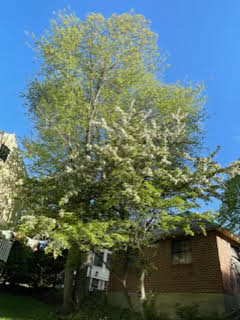
As a society, we are beginning to understand how vital it is to care for our trees. Those focused on expanding the built environment have been too flippant in eliminating shade trees from our city. Nature takes decades to build them up, only to be chain sawed from a cherry picker in a single day.
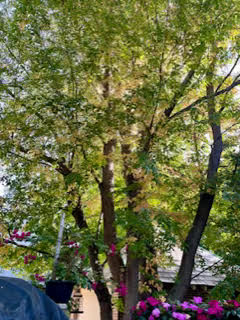
For the sake of saving our urban forest, the Watertown City Council needs to consider protecting trees from those who wish to cut them down for expediency by enacting a tree protection ordinance that could take precedence over private property rights. In this instance, other solutions besides tearing down a monumental and beloved vibrantly healthy black cherry tree should have been considered.
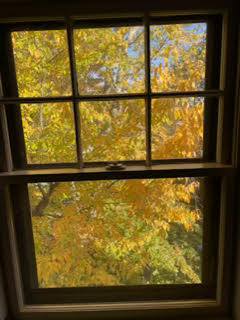
Trees are the heartbeat of our connection to nature. We are going to morn the loss of this black cherry, so on the occasion of its destruction, we wish to tell the people of Watertown: please care for your mature shade trees, we are fortunate to have so many, but they are getting taken down at an alarming rate, please do not take them for granted.
Jean & Gretchen Dunoyer
Watertown Residents
I feel your frustration. Our neighbors’ landlord took down some beautiful silver maples and an oak last year. The maples could have been pruned and the oak was perfectly healthy. We were extremely upset and there was nothing that the city could do to stop them. Instead we asked Watertown’s tree warden to put in new trees by the sidewalks. They won’t be mature for quite some time but it was the one thing we could do. I agree that there must be some kind of policy to ensure that trees are not removed willy nilly. Some communities require landowners to plant a new tree for every one taken down.
Thank you for sharing your story. My hope is that the loss of all of these healthy, vibrant trees will not be in vain.
It is a law in Israel that even on private property, a permit must be granted to cut down a mature tree. The property owner is required to plant the same number of trees in their place or pay for them to be planted. It is illegal to cut down protected mature trees without a permit and can result in fines or imprisonment.
Anne, this is so interesting. Thank you for sharing. I recently learned that Israel is the only country that had more trees at the end of the 20th century than they did at the beginning, so trees are clearly valued there.
This is amazing! Thank you for sharing.
I felt the same way when the TCBY on Mt. Auburn St. closed its doors! More than a mere soft serve shop, it truly was The Country’s Best Yogurt. The city should be empowered to ensure that any such private business, or tree, that serves the public good remains a vibrant community fixture – in perpetuity – regardless of the whims of its owner or the liabilities they might incur.
Trees provide innumerable public health benefits, including shade, oxygen, and vital habitat; they improve air and water quality, and support migratory birds. Similarly, TCBY’s scumptious froyo was packed with probiotics and offered in a variety of swirlable, rotating flavors with fun toppings… all at affordable prices. I don’t know which is more cooling: the shade of a tall oak or the frosty chill of TCBY’s Raspberry Mango Ripple. I just perused their website – https://TCBY.com/ – and was left longing.
They’ve introduced several new products since the city – then still known as ‘The City Known As The Town of Watertown’ – refused to overstep its authority to trample (or, as you deliciously phrased it, “take precedence over”) private property rights. Just imagine if it had: TCKATTOWBY! But, did they even serve a Roasty Toasty Marshmallow swirl in the mid-’90s?!?
It’s difficult to resist the sweet lure of nostalgia-and-what-ifs, isn’t it? In hindsight, the city was right to let TCBY melt away. Otherwise, we’d never have Green Peapod. Meanwhile, other frozen yogurt establishments have sprouted.
Speaking of sprouting, I appreciate the city’s ongoing efforts to enhance our urban canopy with plantings throughout the town, and I’m encouraged by the many new trees that their team adds to our parks and roadside strips each year. The fall foliage of the ‘happi daze’ [sic] sweetgum they recently planted in front of my house is beautiful. I’m hopeful that such greening strips can be replaced along the many streets where they’ve been paved over to provide parking.
I certainly agree that the city should prioritize trees over parking.
If the city plants a tree on private land or requires one to be planted as a condition of a special permit, then we should expect the owner not to cut it down the following year. However, requiring a private homeowner to maintain an unwanted tree without reimbursement should be seen for what it is: a public taking.
Interesting comment! I love frozen yogurt, too. In this instance the tree is on the property line, and it appears that with the survey sticks in the yard right now that most of the tree is on our property. And thankfully we have now found out that the crab apple IS on our property, and per the certified tree experts that accessed both trees…the crab apple will survive the uprooting of the soon to torn up garage. So, it will stay. Both trees are cherished and wanted. And it fabulous state.
I’m with you on Save the Trees. Commenting here to show support.
Thank you, Kerry.
These are our neighbors and the gorgeous tree is on our street. We care about them and about the tree which gives great pleasure to Gretchen who spends many hours at her window looking into its branches. From my time on Watertown’s Environment and Energy Efficiency Committee, I know that a tree ordinance has been in the works for some years, but has never gotten out the gate, so to speak – never made it to City Council. Such an ordinance could require certain steps before a tree like this one could be removed . . . to build an addition to a garage.
Thank you, Pat. I really appreciate your support, and Nadja’s, too. Yes, because of my health condition, I do spend most of my time at home. And a lot of that is at my kitchen window loving the observation of birds and wildlife out of our kitchen window. It’s a very light-filled and peaceful spot. Very healing and calm. Per Libby Shaw of Trees For Watertown: “Many of us in Watertown have experienced what the writers sadly anticipate: the sudden shock of the loss of a longtime green companion, and the long-term elimination of cooling shade, filtered air, tempered rain and wind, wildlife antics, seasonal beauty, privacy, birdsong, curb appeal.” Thank you again for your kindness.
I support you in this and pray that it works out. Your tree is beautiful and important in so many ways.
Thank you, dear Mary
I hate seeing healthy trees removed. It sucks where it is located, making it so you can’t save it.
Thank you, Marian. We appreciate the support.
It doesn’t matter whether it’s The Country’s Best Yogurt or Your Neighbor’s Beautiful Tree – our government’s not responsible for protecting an individual from sentimental loss, especially when a homeowner decides to do something that’s allowed by-right on their own property.
If the ownership of trees relative to lot lines is in question, that’s a private property matter that could be resolved through surveys and courts. The demand for a municipal ordinance of this level is nonsensical.
Perhaps your neighbor needs the garage rebuilt to provide off-street parking (always in demand). Maybe they’d like to create an accessory dwelling unit for rent (by-month or greater, of course).
Large, older trees can become a liability and such an ordinance would create an unnecessary hardship for homeowners. If a homeowner requested permission to remove a tree and was denied or delayed by the city, would the city cover the cost of any subsequent maintenance of that tree, including leaf collection? Who foots the bill for damage or injury caused by future limbfalls?
I disagree with the notion that the city loses a significant number of trees annually to individual homeowner actions… could you refer me to some official count? I assume a greater number are lost due to commercial and multi-unit development. I’d certainly favor some additional restrictions on tree removal at that level (or related requirements for restitution plantings).
I’m sorry you may lose a cherished view, but attempting to limit the rights of your neighbors to care for their own property isn’t the answer.
Reminder to sign comments with your full name.
Thank you for chiming in. Our predicament is more nuanced because the tree is actually 4 trunks rising out of the ground, three of which are on our land. We now know this because our neighbor paid to have plot line drawn. So if we adhere to your strict interpretation of property rights, I could insist on keeping the tree but that would not serve me because the demolition will hurt the roots of the tree, eventually killing it. And if it is not removed first, it will imperil our houses. So it goes back to why destroy the garage foundation. That is the step that is frivolous and unnecessary. What should government weigh in on situations such as this? There are myriad reasons, here goes: Adams Avenue features several century-old properties situated on historically elevated and sloping land. Due to this geography, the mature trees and established root systems in this area play a crucial role in stabilizing the soil, absorbing stormwater, and preventing runoff from moving downhill toward neighboring parcels.
Based on the information shared to date, the proposed work at 29 Adams Avenue may involve changes that could significantly affect:
• Stormwater flow direction and infiltration capacity
• Surface runoff onto adjacent private properties
• Loss of established root systems that currently absorb and slow stormwater
• Changes in site elevation or grading that may redirect water downslope
• Potential increase in basement or yard flooding for nearby homes
Given that this part of Adams Avenue has limited stormwater infrastructure and relies heavily on natural absorption from tree canopy and root systems, even modest grading changes or tree removal can cause substantial downstream effects.
Another: The house at this address was built in 1915 and, according to Watertown’s own historical studies, sits on what was once the last open estate land in East Watertown. Adams Avenue and the surrounding streets retain a strong early-20th-century residential character, with multiple homes from the 1910–1920 period and long-term, multi-decade ownership. The large, mature trees on this property, particularly a prominent black cherry and other long-standing canopy trees, are integral to that historic setting. They frame the house, define the streetscape, and visually link the property to its early development era.
There are numerous other arguments for why individuals in a civilized society are not permitted to destroy their property willy nilly. Hence the building permitting process to begin with.
Excellent information.
I am so sorry to read this. The trees in your neighborhood are such a blessing. And vital, as you wrote so nicely. I mourn your loss with you and your neighbors. “Unless someone like you cares a whole awful lot…”. All of us need to care.
Thank you, Michael.
42 years ago when my husband and I moved into our Green St. house, there was a majestic, beautifully shaped maple tree on the property line. It was huge. It housed birds and bugs and squirrels and turned a brilliant warm gold in autumn. One year, our neighbor hired someone to slice off all the branches, large and small, down their side of the tree. You can imagine how it looked. I was angry and heartbroken. I wept. I embraced the tree and told it how sorry I was for what we (humans) had done to it and promised it that I would take care of it the best I could for the rest of its years. I wept and wept.
I am so sorry for what you are facing on your property. Can some other folks, people in the town, work with your neighbors to help them re-imagine some other positioning of their garage? Perhaps thinking outside the box will reveal a good solution for everybody. I wish you all the best.
I appreciate you kind comment, and feel the pain of what you went through. Our neighbor would not think outside of the box, sadly, despite our pleas for compassion.
The felling of a healthy 100 year old black cherry tree is not an endeavor to be taken lightly. As a previous writer pointed out, a Watertown tree ordinance has been languishing rather than making it to the city council for consideration. Perhaps the discussion here will help generate momentum.
Where development occurs — in this scenario, the building of a large garage along a shared property border — every consideration of existing trees should be given. Could the building expansion allow for the roots of the long-established shade tree to remain intact? It seems not, in this case, as the decision of one homeowner has overridden the expressed interest of the other, on whose property the majority of the imperiled tree does thrive. They both have something important at stake, but perhaps in a considerate, charitable way, another option could have been found to build the garage while sparing the roots – and hence the very life – of this irreplaceable black cherry tree. A tree ordinance, or by-law, could have given room to address the issue to find a potential workaround.
“Of all man’s works of art,
a cathedral is greatest. A vast and majestic tree
is greater than that.”
—Henry Ward Beecher
Massachusetts state law protects public shade trees. Local ordinances, in many communities, supplement this protection for both public and private trees. Watertown is pro-active in planting new trees. This excellent effort could be extended to help sustain existing trees.
It takes 30 years for a black cherry tree to reach its fruit-bearing potential. As a wildlife feeder, it is recognized as second, only behind the mighty oak! Over 40 bird species are known to seek its fruits and branches. Countless pollinators benefit from its pollen and nectar. It is a documented host plant to over 400 species of moths and butterflies. These include the eastern tiger swallowtail, cherry gall azure, red-spotted purple and viceroy butterflies. These butterflies, birds and pollinators rely on us to help support their diminishing populations Unfortunately, it is getting harder to find an older black cherry tree like the one that has lived for a century on Adams Avenue.
It is not “sentimental” when a resident appreciates the flourishing tree outside their window and the wildlife drawn to it. Many readers can relate to that quiet joy. It shows wisdom and compassion in a person who understands their connection to all living things. This is the kind of thinking that benefits all.
“Nature is not a place to visit, it is home.”
— Gary Snyder
Beautiful words Martha, thank you. We Are the Forest.
Trees for Watertown thanks everyone who has responded with thoughtful comments regarding the threatened destruction of this vigorous, 100-year-old black cherry tree and the crabapple near it, and especially to Jean and Gretchen themselves for their sustained efforts and activism.
In their letter and in the following comments, Jean and Gretchen vividly describe the many ways that cutting down this big healthy urban shade tree will impact not just its nearest neighbors, but the whole neighborhood.
They are far from alone in this experience. Over the years Watertown residents have shared with TFW stories of shock and loss when long-standing, healthy neighborhood trees have suddenly disappeared.
It’s not just the loss of the healing presence of a beautiful tree outside their home that they mourn. They also describe the impact of loss of privacy, glaring summer heat in their home after nearby cooling tree canopy is gone, dusty surfaces in their homes without that filtering tree canopy, rain that sweeps into newly-unsheltered windows, a basement that floods during downpours after a nearby tree was destroyed.
In a dense city like Watertown, every big healthy tree contributes vitally important municipal, community, and ecological services. Unlike other forms of urban infrastructure, these benefits grow exponentially with time. It’s important to keep in mind that it will take 30 years for a new tree to match the magnitude of benefits a 30 year old shade tree already does. And it’s far from a given that new replacement trees can thrive as well as big healthy trees they replaced.
Urban shade trees are truly infrastructural superstars, especially the trees sharing their benefits among multiple neighbors in back yards and side yards, which make up the majority of Watertown’s shade tree population. And these benefits will continue to increase over the decades-long lifetime of a protected tree.
The potential impact on private homeowners of increased responsibility for maintenance of their shade trees is a very valid concern and must be addressed. But big healthy neighborhood shade trees are undeniably a common good. Watertown is long overdue to start giving our existing neighborhood trees the value and protection they deserve.
Thank you again to Jean and Gretchen for raising awareness of this issue, and to everyone else who took the time to share their thoughts.
What can we do to push the “languishing” tree ordinance before the council? This is not just a life and death issue for our trees. It’s a life and death issue for us, the residents of Watertown, and our environment! If we are serious about climate change, this is a simple step we can take.
Well said. Thank you.
Thank you, Libby. You are so wise and an invaluable support to our community!
Yes! Watertown needs a stronger tree ordinance! When we moved into our house near Charles River Road, though we are in a dense neighborhood, most of the views from the 2nd floor were of large, mature adjacent trees. Now, many years later, seven huge trees have been removed from right around us. Two removals were truly a matter of safety, one huge, old Elm tree was diseased and dropped a huge branch, nearly hitting our 85 year old neighbor, so I can’t argue with that one, but five other huge, healthy trees were chopped down for no apparent reason.
This side of the neighborhood is noticeably hotter in the summer now and the views out of our windows now are of structures not trees.
Our experience was impacted by the loss of the upper portions of the trees, the shade, the bird habitat and the beauty of the trees, but as mentioned above, the removal of the root structures can also drastically change drainage, water runoff and ground stability, all equally crucial, and all potentially disastrous depending on the area. The City of Watertown needs to value all trees, especially the large, mature trees that shade our homes and beautify our city.
Sorry to be late to this important discussion! Why doesn’t the City of Watertown have a strong tree ordinance? For an example, it’s worth visiting the City of Cambridge’s Tree Protection Ordinance, which requires permission from the City’s Arborist, as well as a Tree Study, before a private tree can be cut. Will the Watertown neighbor, who is cutting down this essential shade tree, help to pay the affected neighbor’s increased electric bill, when the house loses much-needed cooling shade in the summer? Since trees absorb CO2 and convert it to oxygen, they are also important to climate mitigation. I hope that our City’s elected officers will read these excellent comments and realize how many Watertown residents value trees. They need stronger protection!
Thank you for your insightful comment.
I am so sorry to hear this. Now more than ever, trees should be valued and prioritized for the many vital roles they play: cooling by providing shade, taking carbon dioxide from the atmosphere, and providing vital habitat for wildlife. It takes many years for a tree to grow to the size of this beautiful cherry, and it now is at its peak for providing these benefits. On the other hand, we should be reducing our use of cars as much as possible, given the fact that carbon dioxide is building up in our atmosphere at an alarming rate and we have so far only experienced the tip of the iceberg with respect to increases in temperature, extreme weather events and sea level rise. I hope those wanting to cut down the tree will reconsider and take the long view toward the future of our planet.
Thank you, Laela. Very wise. I appreciate your words.