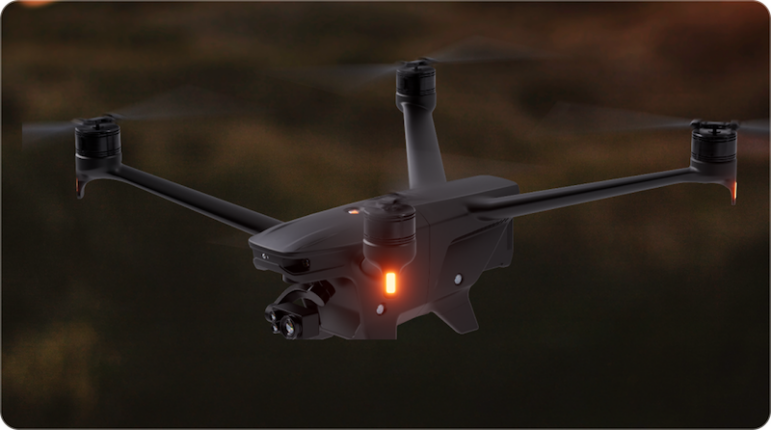
An automated drone is one of the new technologies being considered by the Watertown Police Department. On July 9, the City Council’s Public Safety Committee held a hearing to ask questions and hear from the public about the possible use of a drone.
The Police Department’s request to have a drone came up in May at a budget hearing. The drone being considered by the Watertown Police is made by Paladin Drones, and would cost $24,000 to purchase, plus an annual cost of $49,000. Paladin’s drones are use solely by public safety agencie, and the company currently works with 115 communities.
Many residents asked about what it would be used for, who would have access to the information collected by the drone, and who would control the drone. Some residents supported the new technology, saying that it could improve safety and save lives. Others were concerned about the drones being used to record people and information being shared with other law enforcement agencies, such as Immigration and Customs Enforcement (ICE).
How it Would Work
The drones would sit in a docking station at the Watertown Police Station and when the drone is called into service it launches out of the dock and flies automatically to an address or location in town. When it arrives it will be controlled by an officer at the Police Station.
The drone would not go to all calls, and each use would have to be approved by the officer in charge of the shift, said Watertown Police Chief Justin Hanrahan.
“It wouldn’t be an officer on the street deciding to dispatch the drone,” Hanrahan said. “It would be the dispatcher that’s making that decision within guideline, then they would have to get approval — ‘Hey, Lieutenant, is this OK to send the drone to this fire call?”
When the drone flies, the camera is pointed at the horizon, said Paladin representative Wilson Riendeau, so it will not be recording properties underneath. When it arrives at the scene the camera will point down and an officer will take control of the drone.
The drone can reach anywhere in town in 2 minutes or less, Hanrahan said, which is a faster response time than an officer in a cruiser.
“The first few minutes of an incident often shape the outcome of what’s going to take place. Eyes on the scene before first responders get there can be incredibly helpful for a variety of reasons,” Hanrahan said. “It reduces the guesswork of what’s taking place, reduces over-response. If we can get an idea of what’s happening at the scene, we don’t have to send as many police officers, ambulances, or fire trucks. In some cases, it will reduce unnecessary interactions with people on the street. If we get a call of a suspicious person, and we have a drone over there, we can maybe determine that it’s not something to be concerned about before we have officers detaining somebody.”
Riendeau said a similarly sized community, Forest Park, Georgia, uses its drone about 15 times a week. That amount could be as high as 45, he said, if more types of calls are added, such as use by the Fire Department.
Some examples of the types of incidents the drone would be dispatched to, Hanrahan said, include a missing endangered person, car crashes, fires, hazards, and active threats. The drone can help get an early assessment of a situation, he added.
“We have a serious car crash. We can get an overhead look at what happened, things like that,” Hanrahan said. “Medical support if there’s someone along the bike path who fell off their bike and has a head injury, and we’re trying to find them. The drone will find them much faster than we would on foot or in the car.”
Paladin’s drones typically fly at an altitude of 200 feet, which meets the FAA guidelines and allows it to be flown without a visual observer in the field, Riendeau said. The drones have an IP 55 rating which allows it to operate in “pretty heavy wind conditions, rainy conditions, snowy conditions” Riendeau said.
Concerns
Members of the Public Safety Committee asked several questions. One of which was about whether the use of the drones, and the data and video collected, would be limited or could it expand. Council Vice President Vincent Piccirilli, who sits on the Public Safety Committee, said that was why the Council decided to end the contract with the Flock Safety cameras.
One of the concerns, Piccirilli said, is that the City officials thought the cameras were going to be license plate readers, but Flock announced that the company would be able to take the cameras and build a nationwide surveillance system and give the information to the federal government.
“I just want to point out that the contract we signed with Flock said we have the absolute title to all the recordings. It will not be shared without the police chief’s usage,” Piccirilli said. “And then at the back of the contract it said, at their sole discretion, Flock could use and share that recordings with any Federal agencies if they so determined what they needed to.”
Riendeau said Paladin has a section of their contracts that municipalities can tailor to their needs.
“Unlike other providers in the space, we have something called Exhibit C in our contract, which is essentially a big blank piece of paper for you guys to fill out terms and conditions that are vital to the town,” Riendeau said. “And our team’s 99.9% of the time going to accept those revisions.”
Former Councilor Angeline Kounelis asked what the liability would be for the Watertown Police running a machine that flies over the City, and private properties.
Riendeau said Paladin has never had a drone that “fell from the sky,” and has built in features, such as obstacle avoidance sensors, and the drone will automatically fly back to the dock when the power is running low. The company also would carry a $2 million insurance policy on the City’s behalf, Riendeau said.
Drone Policy
The Watertown Police are creating a policy for using the drones, and how the information captured can be used, Hanrahan said.
“We have a draft. I didn’t want to fine tune a policy without hearing from the community, hearing inputs from Committee members,” Hanrahan said. “Also, I think with any policy, even with our body-worn cameras, we’re constantly modifying them because we’re learning new things that we didn’t think of.”
Councilor Nicole Gardner, who chairs the Public Safety Committee, suggested the Police Department’s drone policy be reviewed by the law firm used by the City, KP Law. Hanrahan said that his concern is that the guidelines in the policy could be so strict that it gets in the way of using the drone to its potential.
“A lot of times until we actually start utilizing this technology to see where it can be useful, where it might not be useful for. That’s going to take some time,” Hanrahan said. “And if we have to come to the Committee for a change, it just takes a long time to do that, and it could hinder the operation. So, I’d like the operational aspect of it to have some control at the PD level, obviously with some guardrails in place based on concerns of the community and the Council.”
When the drone can be used will be part of the policy.
“It’ll be a policy we utilize strictly, guiding when we can use this and when we can’t,” Hanrahan said. “A supervisor has to approve its use as well, so it’s not like some rogue officer is going to go out and use it to fly over his ex-girlfriend’s house to see if she’s home.”
The Police have heard the public’s concerns about mission creep, Hanrahan said, where something is proposed to do one thing, and then is used for other purposes.
“There’ll be written limitations in our policy. Everything will be logged. Every use of it will be logged,” Hanrahan said. “The transparency portal will all be available to anyone who wants to see that.”
The transparency portal tracks each of the drones’ flights, the path it traveled, and how long it was in the air. Hanrahan plans to make the portal available on its website, which will be accessible to every member of the public.
He added that the drone is not meant for surveillance.
“There is a camera mounted on these things, but it’s it’s not a surveillance tool in that respect. The maximum fly time for these drones is 40 minutes, so it’s not something you’d be monitoring somebody for a long period of time,” Hanrahan said. “It gets to the scene, it gives us a visual of what’s taking place, and then in most cases it goes back to the port and recharges itself again.”
Some people at the meeting raised concerns about the drones being used to spy on people.
“Obviously, it’s not for random surveillance. We’re not going to fly this thing around to just spy on people. No targeting of protected classes, and obviously not using it to intimidate or harass, discriminate against anyone,” Hanrahan said. “No weaponization of this item. I know the big concern is ICE involvement, and certainly we will prohibit that use as well.”
The information gathered from the drones could be shared with other law enforcement agencies, under certain circumstances.
“Outside sharing will be limited for valid public safety reasons,” Hanrahan said. “I really can’t even see where someone else might need this, but maybe Waltham PD is investigating a crime, and it might be helpful for them to use it. I don’t want to have a strict, absolutely no use when there may be something that’s useful for this.”
The policy will have safeguards against using drones to spy on people or events, but Hanrahan said he does not want the policy to be too strict.
“I do want to caution having strict limitations. If there’s a political rally in Watertown Square, and we have intelligence that someone may plant the bomb, we may want to be able to utilize that to scope out the area to make sure that it’s not,” Hanrahan said. “But I certainly understand the concern that, and it’s not intended to be used for that. We will obviously create guidelines to prevent that.”
Piccirilli said the Committee will use the input to help shape the drone policy.
“I’m looking forward to working through the details and figuring out the common sense things and hearing from the public, of course, what their concerns are,” Piccirilli said.
Gardner said that she and City Council President Mark Sideris met with the ACLU to speak about their opinion and concerns about use of drones by law enforcement. The group will be issuing a statewide recommendation for drone use, Gardner said.
“I don’t know that it necessarily makes sense to reconvene the Committee prior to the ACLU (guidelines) coming out, but I would be certainly open to that if there’s progress that (the WPD) would like to share with the community or input you’d like to receive from the community along the way,” Gardner said. “My expectation would be for the work to happen over the course of the summer, and for us to reconvene in the fall, just given vacation schedules and such.”