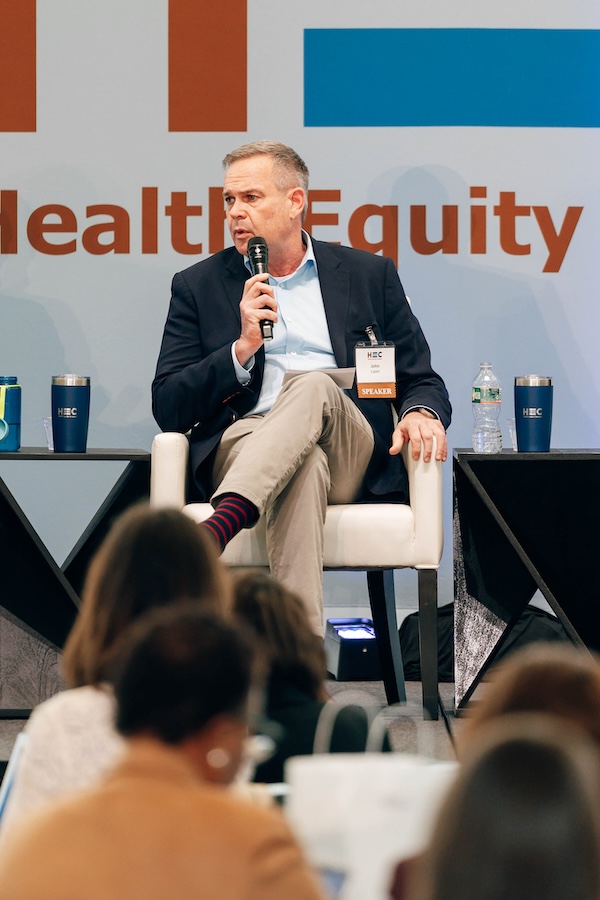
Watertown State Rep. John Lawn joined a panel of lawmakers speaking about trends in health care in a time when federal policies are changing the system. See more information in the announcement from Health Care Compact, below.
The Health Equity Compact convened Massachusetts policymakers and leaders at its 2026 Health Equity Trends Summit on June 2, 2026, at UMass Boston, where new approaches to advancing health equity for marginalized communities were discussed at a time when restrictive federal policies are limiting and reshaping access to coverage and care.
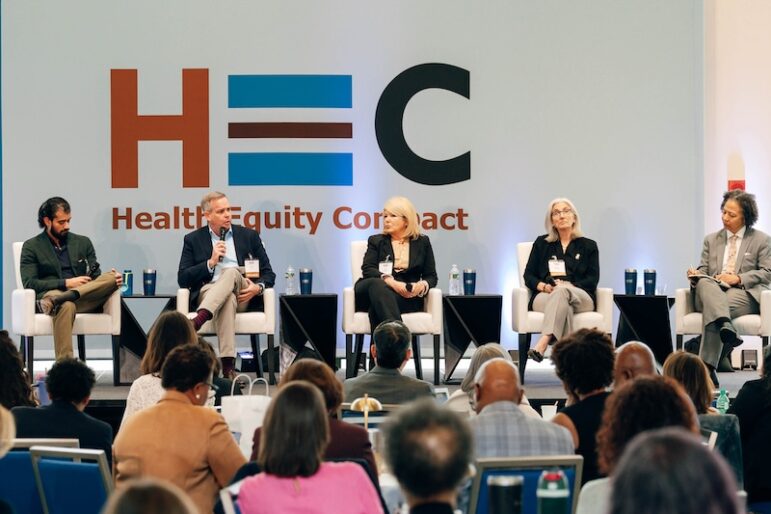
The daylong Summit featured notable speakers and panelists pressing for health systems change and deepening community investments by creating alignment on possible pathways to progress, including supporting enactment of “An Act to Advance Health Equity” and other legislation, protecting health care access for recently uninsured individuals, reforming primary care, and promoting community health workers. The event concluded with a move to action, providing health leaders with tangible next steps for activating the topics in their respective communities across the Commonwealth.
“When public and private sectors come together to listen to communities and work to address inequities, we are better able to advance health equity and improve health outcomes across our state,” said Lieutenant Governor Kim Driscoll, who was a featured speaker at the event. “We know that our health equity work does not just live within one initiative. Equity lives in everything we do. That’s why, with the help of our partners in this industry, we’ve eliminated prior authorizations, taken on medical debt, and are working every day to make health care more affordable and accessible for all of our communities.”
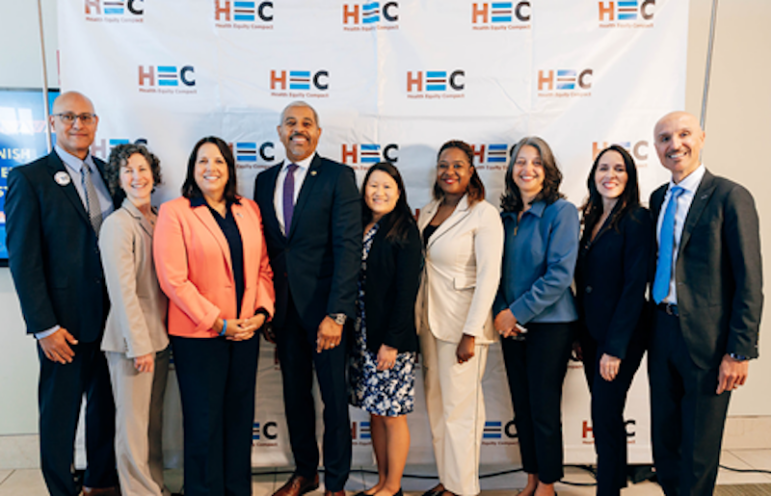
“At a time when many communities are facing significant challenges and uncertainty, the Healey-Driscoll Administration continues to lead with purpose, pragmatism, and a steadfast belief that Massachusetts can—and must—be a place where every resident has the opportunity to thrive,” said Juan Fernando Lopera, Chief Community and Health Impact Officer at Beth Israel Lahey Health and Health Equity Compact Board Chair.
“It can feel like the health equity movement and the people that care about this work are invisible, but we are here; we are here together,” said Lindsey Tucker, Health Equity Compact Managing Director, during opening remarks. “People in positions of influence and in communities across Massachusetts care deeply and are doing the work. Having such diversity of leadership in this room is remarkable and special, and collaboration is what makes our work possible.”
“We all know that health equity is both a moral issue and an economic one, and so, when people can access preventative care and communities are more stable, health care costs go down,” said Rahsaan D. Hall, Urban League of Eastern Massachusetts President and CEO, and Compact member. “When communities have what they need to thrive, all of us benefit. Nobody’s healthy until everybody is healthy.”
Other speakers and panelists included:
- Massachusetts State Senator and Chair of the Joint Committee on Health Care Financing Cindy Friedman
- Massachusetts State Representative and Chair of the Joint Committee on Health Care Financing John Lawn
- Undersecretary of Health for the Massachusetts Executive Office of Health and Human Services Amy Rosenthal
- Health Law Advocates Supervising Attorney Jen Cedor
- Brockton Neighborhood Health Center CEO Maria Celli
- Codman Square Health Center Chief Medical Officer Dr. Renee Crichlow
- Fishing Partnership Support Services (New Bedford) Community Health Liaison Deb Kelsey
- Community Care Cooperative Chief Business Officer Aditya Mahalingam-Dhingra
- United Way of Massachusetts Bay Ansin President and CEO Marty Martinez
- Harvard Graduate School of Education Visiting Fellow and Eastern Bank Foundation Fellow Eva Millona
- Lowell Community Health Center Chief Public Policy Officer Sheila Och
- City of New Bedford Health Department Program Director Luz Ortega
- Massachusetts Association of Health Plans President and CEO Lora Pellegrini
- Volunteers in Medicine Berkshires Executive Director Ilana Steinhauer
- Worcester Refugee and Immigrant Support and Empowerment (RISE) for Health Founder and Executive Director Dr. Olga Valdman
- New Bedford Community Health Lead Certified Community Health Worker Doraliz Vega
The day started with a pre-Summit Allies Breakfast for the inaugural members of the Compact’s Corporate Allies Network, 2026 Summit sponsors and select corporate and non-profit friends of the Compact. Hosted by Corporate Allies Network co-chairs Chris Reddick, Head of U.S. Community Health & Equity at Takeda, and Manny Lopes, President and CEO of Fallon Health, the breakfast and subsequent roundtable discussion brought together leaders across sectors to share some of the challenges and pain points their organizations are facing in this moment, and where partnerships brokered through the Compact could help.
“The Corporate Allies Network was created to consistently find ways to unlock new opportunities that can only be achieved through cross-sector partnership,” said Chris Reddick. “This year’s Allies Breakfast was a reminder of how many stakeholders are ready and able to add their expertise and resources to our collective vision for a healthier and more equitable Commonwealth, and we hope more will join us and other Compact forums to take action.”
The Health Equity Trends Summit, now in its fourth year, has 24 event sponsors, including the Compact’s institutional sponsors, Atrius Health Equity Foundation and Takeda. Both organizations are major supporters of the Compact’s mission and vision for a more equitable future. Transformative, multi-year investments from these two partners have significantly contributed to the Compact’s work over the past three years.
About Health Equity Compact
The Health Equity Compact (“the Compact”) is a Massachusetts-based, nonprofit 501(c)(3) cross-sector coalition of health, business, and community leaders advancing racial and health equity to ensure everyone in the Commonwealth has a fair opportunity to be healthy. Persistent, measurable inequities in health outcomes, access to care, and the conditions that shape health continue to harm communities and weaken the state’s health system.
The Compact brings together leaders with lived experience alongside professionals responsible for shaping policy, care delivery, and systems. Through collaboration and partnerships—including its Corporate Allies Network—the Compact advances practical, evidence-based solutions that improve health outcomes and strengthen the system for all residents of Massachusetts. The Compact is committed to working collaboratively with partners and communities across the Commonwealth to build a health system that works better for everyone. For more information, visit www.healthequitycompact.org.