Watertown’s Town Clerk Retires After 26 Years, Oversaw Challenging 2020 Elections

John Flynn, right, retired after 26 years serving as Watertown’s Town Clerk. Here he swears in members of the Town Council at the Watertown Inauguration on Jan. 2, 2018. A fixture in Town Hall whose smiling face welcomed many to the Town Clerk’s office has retired after more than a quarter century serving the residents of Watertown. Watertown Town Clerk John Flynn stepped down after 26 years in the position that oversees elections and Town records among many duties.

Town Council Approves Creation of Watertown Public Arts and Culture Committee

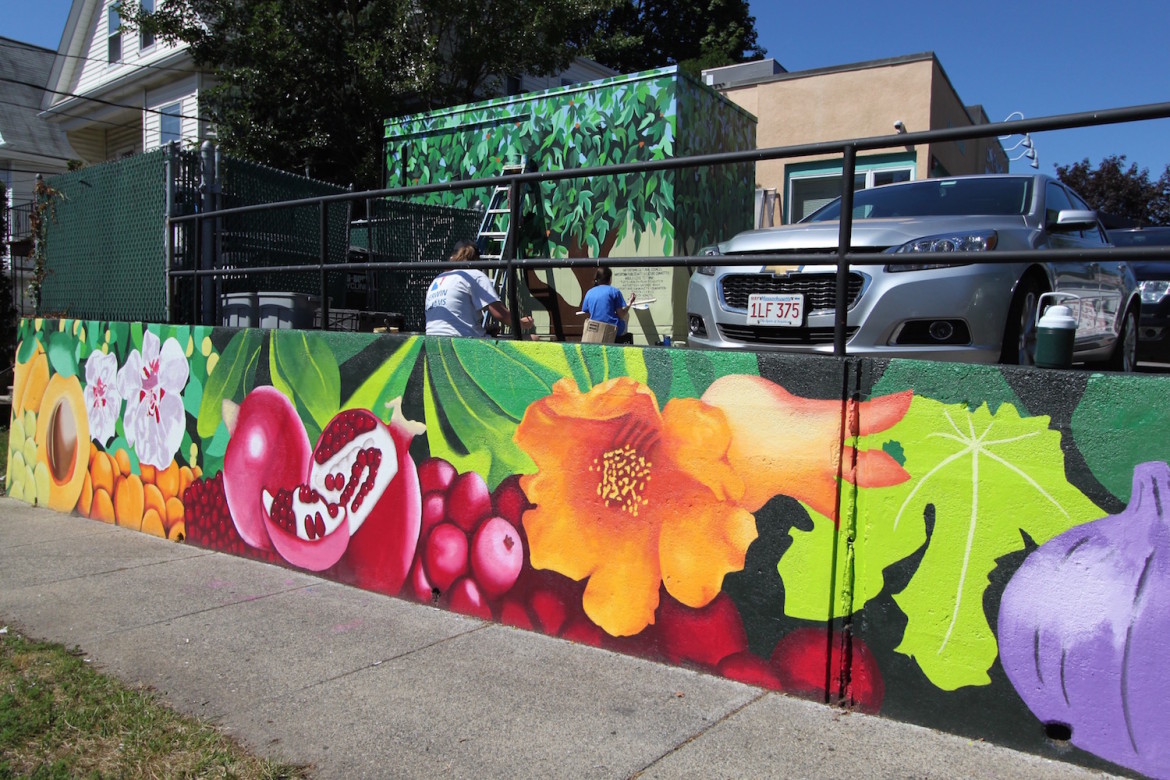
The Town Council approved the creation of the Public Arts and Culture Committee, which will make recommendations for public art similar to the mural painted at Uncommon Grounds, as well as cultural events. A Public Arts and Culture Committee will be appointed by the Town Council to make recommendations on public art and cultural programs in Watertown. The Town Council approved the committee’s creation on Tuesday night. It will have nine members and will make recommendations that must be approved by the Town Manager and Town Council. The Public Arts and Cultural Committee’s recommendations will fall into two areas, according to the Town Council’s resolution:

Art in Public Places: Permanent, semi-permanent, temporary, and ephemeral artworks and activations that create a vibrant, welcoming, inclusive, and connected public realm.

Zoning for Central Business District Changed to Allow Labs, Light Industry in Historic Buildings

The Town Council approved a change to Watertown’s Zoning Ordinance that would allow life science labs as well as light industrial uses in the downtown area near Watertown Square, but only in structures built 84 years ago or before. The amendment was proposed by Berkeley Investments, the new owners of the building now occupied by Sasaki at 64 Pleasant St., which plans to create life science lab space and preserve the historic mill building, said Assistant Town Manager Steve Magoon. The Zoning amendment changes allowable uses for structures built before the Zoning Ordinance was adopted in 1937, and would allow light industry, non-nuisance manufacturing, laboratory/research, and renewable research. It only applies to the Central Business (CB) zone, which is around Watertown Square. The uses would be allowed by right in the qualifying buildings under 4,000 sq.

Watertown COVID Cases Creep Up for Third Week, Nearly 40% of Residents Got First Vaccination Shot

Watertown’s COVID-19 cases continued to increase for the third straight week. according to the Mass. Department of Public Health report, and nearly 1-in-5 Watertown residents have at least started the vaccination process. The Town had 93 cases over the previous 14 days, according to the state’s report from April 8, a dozen more than the previous week. The positive test rate also rose for the third straight week, from 1.48 percent on April 1 to 1.72 percent on April 8.